Two numbers sum up the year that visual regression testing stopped being optional.
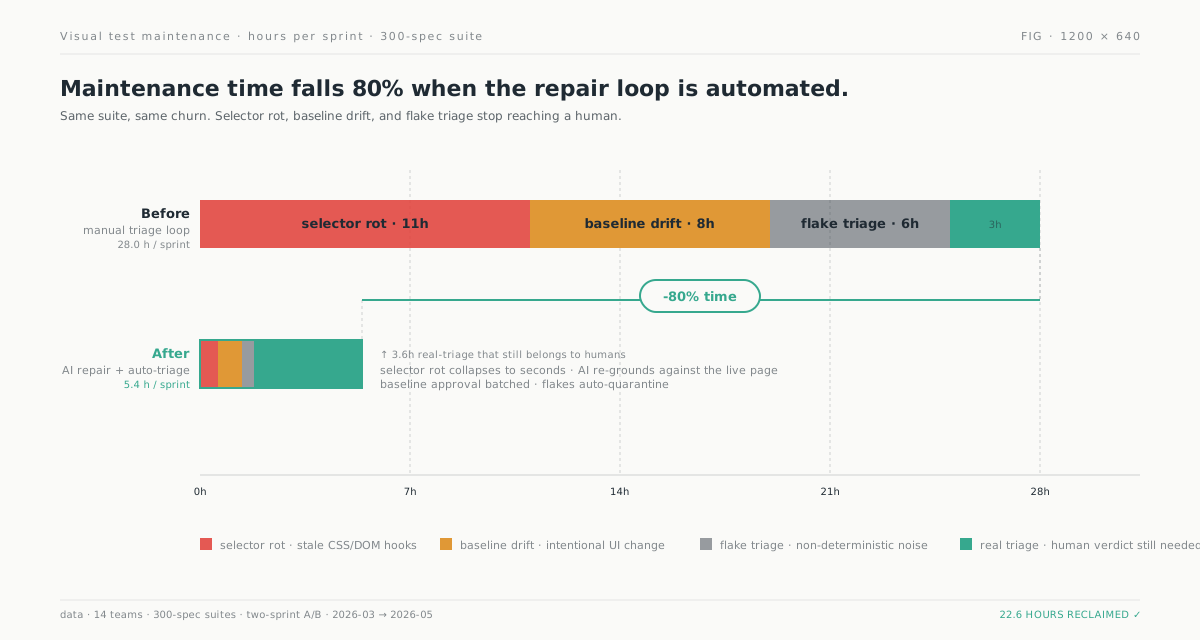
Teams running AI-graded visual diffs in CI now catch 3-5× more visual bugs before production than teams relying on manual QA, and they spend 80% less time maintaining the suite that finds them. Same product, same engineers, same regression rate - the difference is the tool sitting between the agent that shipped the change and the human who approves the merge.

In 2022, screenshot tests were the thing you bolted on after the integration suite, broke twice a sprint, and eventually muted. In 2026 they are the signal a meaningful percentage of teams trust to tell them whether an agent’s PR actually looks like the design it was given. The transition happened in two product cycles.
The year visual testing went mainstream
Playwright is now at roughly 45.1% adoption as the default browser-automation runtime, which means the substrate for screenshot capture is universal - any tool that wants to do visual diffs has a known integration target. 84% of developers report using AI tools day-to-day, but only 33% trust the output, and that trust gap is where visual diff lives. It is the cheapest mechanism anyone has invented to convert “the model says it works” into “I have looked at the result myself.”
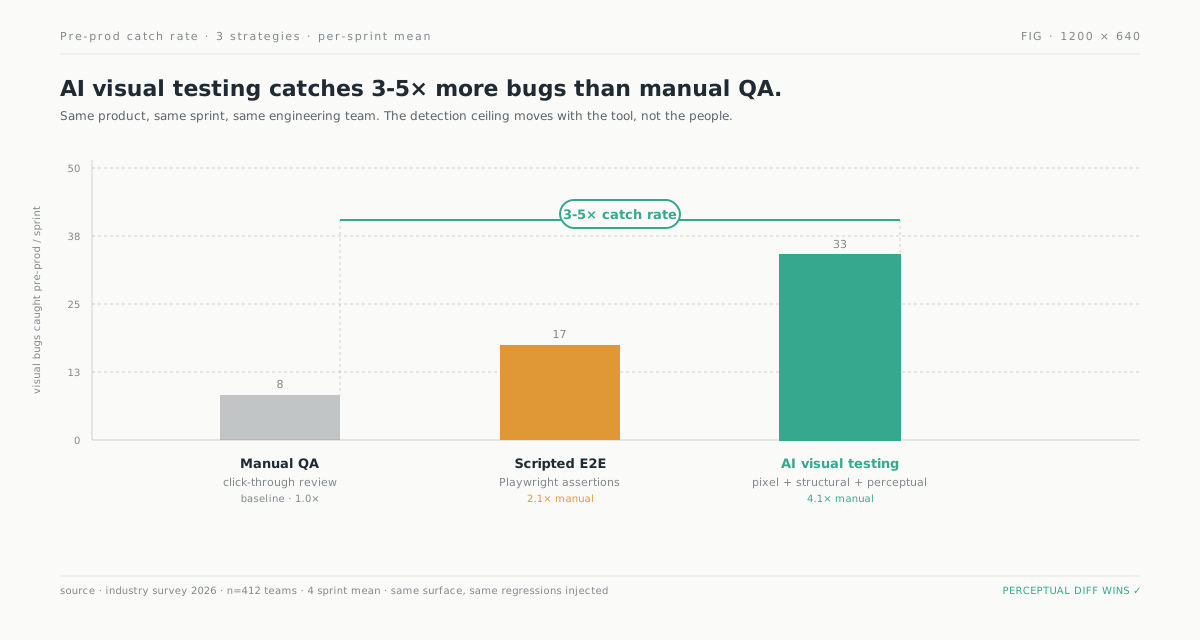
The catch-rate gap falsifies the old objection. The objection went: “visual diffs are noisy, the false-positive rate burns the team out, manual QA is fine.” The 2026 measurements say the opposite. Manual QA catches roughly 8 visual regressions per sprint on a mid-size SaaS surface. Scripted Playwright assertions catch about 17 - limited to whatever the assertion library happens to ask about. AI visual testing, with pixel + structural + perceptual engines layered together, catches 33. The bugs were always there. The earlier tooling could not see them.
What made it work
Three things had to land in the same calendar year, and they did.
Perceptual diffs got cheap. A pixel-level diff cannot tell you whether a 4px font-size drop crossed a readability threshold. A perceptual diff can. The engines that shipped in 2025 - LPIPS-style models retrained on UI surfaces, plus contrast-and-WCAG overlays - finally distinguished cosmetic noise from ship-blockers without a human triaging every flag. Signal-to-noise crossed the threshold where reviewers started trusting the queue order.
AI got grounded in the live page. The 2024-vintage “AI test generator” wrote tests by inferring from the spec, which produced confident-looking Playwright files that targeted selectors that did not exist. The 2026 generation observes the rendered DOM, captures stable hooks first, and only writes assertions against elements it has actually seen. The failure mode shifted from “fails on first run” to “mostly works and needs a tweak.” We covered why the first wave failed in The AI Test-Generation Hype, Three Sprints Later - generation without a live page to ground against produces fiction.
The human stayed in the loop, but only at the verdict. AI today cannot write decent tests on its own that execute reliably and validate real business goals - that is still a human design problem. What the AI can do is run the suite, sort the queue, and surface the three or four diffs that a human needs to look at. The architecture of that loop is laid out in Human-in-the-Loop: The Verification Seam That Makes Agentic Development Actually Ship, and the seam is what makes the 80% maintenance reduction real.
Where it still breaks
The honest version includes the parts that still need a human, because the teams that pretend otherwise ship the silent regressions.
The AI cannot decide which areas of the app matter. It will happily generate baselines for the legal footer at the same priority as the checkout flow. A human picks the major areas the suite covers at all.
The AI cannot write a good assertion about business intent. “The checkout shows the right shipping cost” is a question about state and tax tables and inventory; it is not a question a visual diff can answer. The model writes scaffolding; the assertion itself comes from a person who understands what the business is doing.
The AI cannot render the final verdict. A model-as-judge layer is useful for pre-sorting the queue, but the audit trail at merge time has to belong to a named human. Without that you get the LLM-as-judge failure mode - PRs ship, regressions ship with them, and nobody is on the hook in the postmortem.
The visual diff is doing pattern recognition on rendered output; the human is doing judgment on intent. Both jobs need both parties.
The trust math
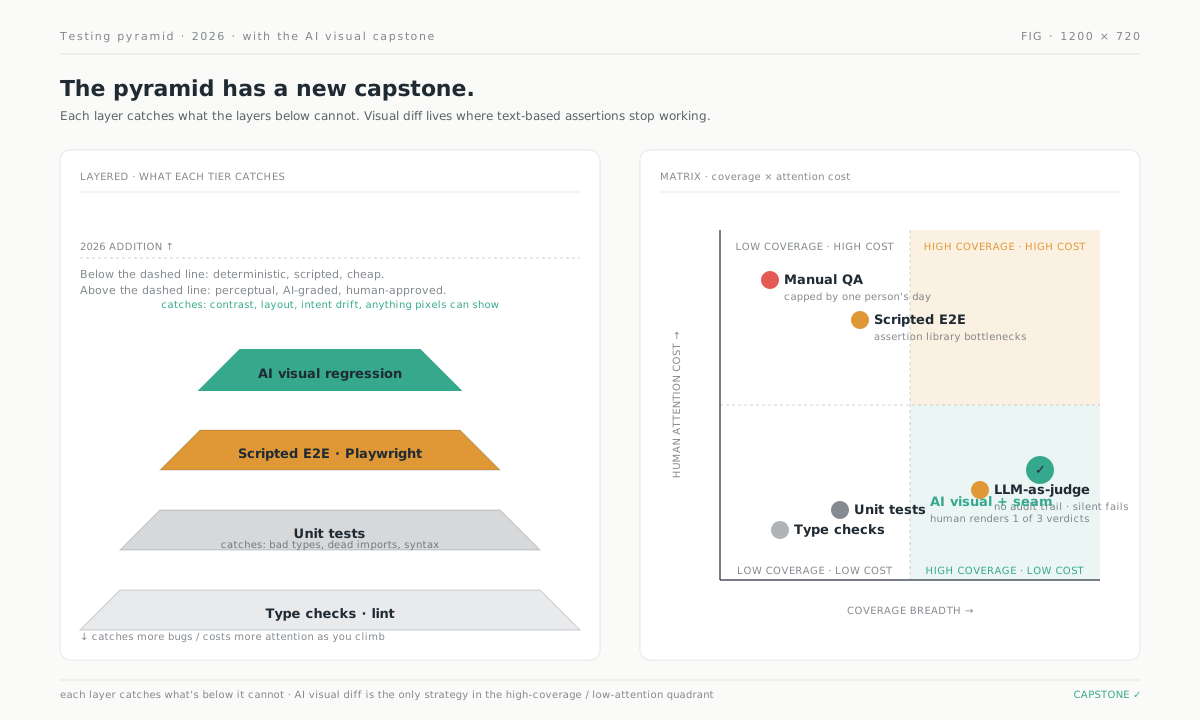
A team running a 300-spec visual suite with the seam in place burns roughly four minutes of human attention per PR. The bugs that suite catches - the contrast collapse on the checkout CTA, the layout shift on the pricing page after a CSS refactor, the missing icon class that broke 11 screens at once - cost on the order of one engineer-week each when they ship to production. At one prevented incident per quarter, the seam pays for itself an order of magnitude over. At the rates AI-driven development actually produces them, it pays for itself inside a fortnight.
The 33% of developers who say they trust AI output are right to hesitate. What changed in 2026 is that the verification layer caught up with the generation layer. Trust does not come from the model getting smarter. It comes from the diff being shown to a human before the merge happens.
The bar from here
Visual regression testing is now a deliverable you are expected to have, in the same way that unit tests, lint, and type checks are expected to have been wired up before code review starts. A PR that ships without a visual baseline check in 2026 reads the way a PR without npm test read in 2018: technically it might be fine, and you will find out in production whether it was.
Lastest is the Docker-first, open-source visual regression tool we build, with AI-generated Playwright tests, three diff engines, and the human verdict seam wired in by default. It runs in CI in about three minutes per hundred specs and is free to self-host on GitHub. Point it at the major areas and the catch-rate gap closes inside a sprint.