A job posting crossed our desk last week that would not have existed in 2023. A payments company hiring a “QA Orchestrator.” No Selenium experience, no framework checklist. The ask: write quality objectives in plain English, route AI subagents, review diffs. One line under the bullets: you will not be writing tests by hand.
For decades, QA professionals have been the executors. That era is ending - the phrase comes from the QA Trends 2026 report - and the role replacing it is genuinely new. Same person. Different leverage.

What changed
AI subagents now draft Playwright specs, write feature code, run CI, and sort diff queues without supervision. Roughly nine in ten engineering orgs are experimenting with generative AI in quality engineering; only about one in seven have operationalised it. The transition is closing that gap.
84% of developers use AI tools. Only 33% trust the output. That distrust reflects months of fixing hallucinated selectors and tests that pass while validating nothing. The teams that closed the gap did it by putting a human at exactly one point in the loop - the verdict - and removing them from everywhere else.
What the orchestrator actually does
“Orchestrator” is not a rebrand of “test lead.” It is a working pattern with a specific sequence, the same one we documented in the human-in-the-loop agentic dev cycle.
Five things, in order, every day:
- Frames the objectives. Quality set by area, in English. “Checkout must convert. Settings must be discoverable.” Outcomes, not assertions.
- Routes the subagents. Four lanes: test author drafts specs, implementer writes features, validator runs three diff engines, ticket scribe writes the next ticket. Point each lane at a ticket and walk away.
- Watches the diff queue. A validation surface like Lastest sorts by severity. Pixel noise drops to the bottom; structural drift and perceptual ship-blockers bubble up. Open the queue twice a day.
- Renders the verdict. Three buttons per iteration: pass (close, accept the new baseline), miss (build does not match intent - improvement ticket), regression (something that worked is broken - bugfix ticket). No free-text triage. No prompt writing.
- Closes the loop. The verdict deterministically files the next ticket. Sign the merge and move on. Tomorrow’s baseline is what got approved today.
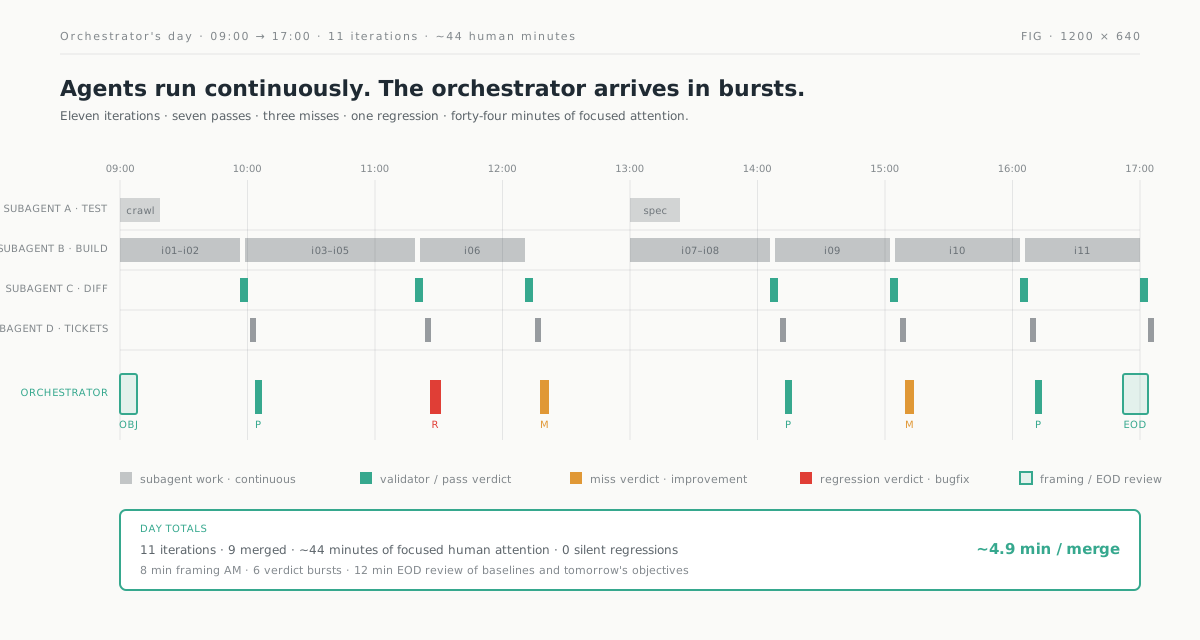
The bursts make it sustainable. Nothing here is “watch the agent work” - the agent has already worked by the time the human arrives.
What AI still can’t do, and why this isn’t “AI replacing QA”
AI in 2026 cannot write tests that genuinely validate business goals. Not “cannot yet.” Cannot, today, at the rates that would let you remove the human from the verdict.
What breaks when you try:
- Selectors hallucinate. The model writes
data-testid="submit-button"from training data. Your button isdata-testid="checkout-cta". The test fails on line one - or worse, passes against the wrong element. - Edge cases get ignored. The model writes the happy path. It does not know your billing flow has a partial-refund branch or a corporate-card override.
- Test data is wrong. Hardcoded waits, hardcoded user IDs, hardcoded order amounts that pass on a fresh database and fail in staging.
- Business intent is invisible. It can assert “the submit button is clickable.” It cannot assert “checkout conversion did not regress.” The second is a business outcome the model has no access to.
The orchestrator is required, not optional, because they are the only entity in the loop with a definition of “good” grounded in business reality. Strip them out and you get a sea of green checkmarks that mean nothing.
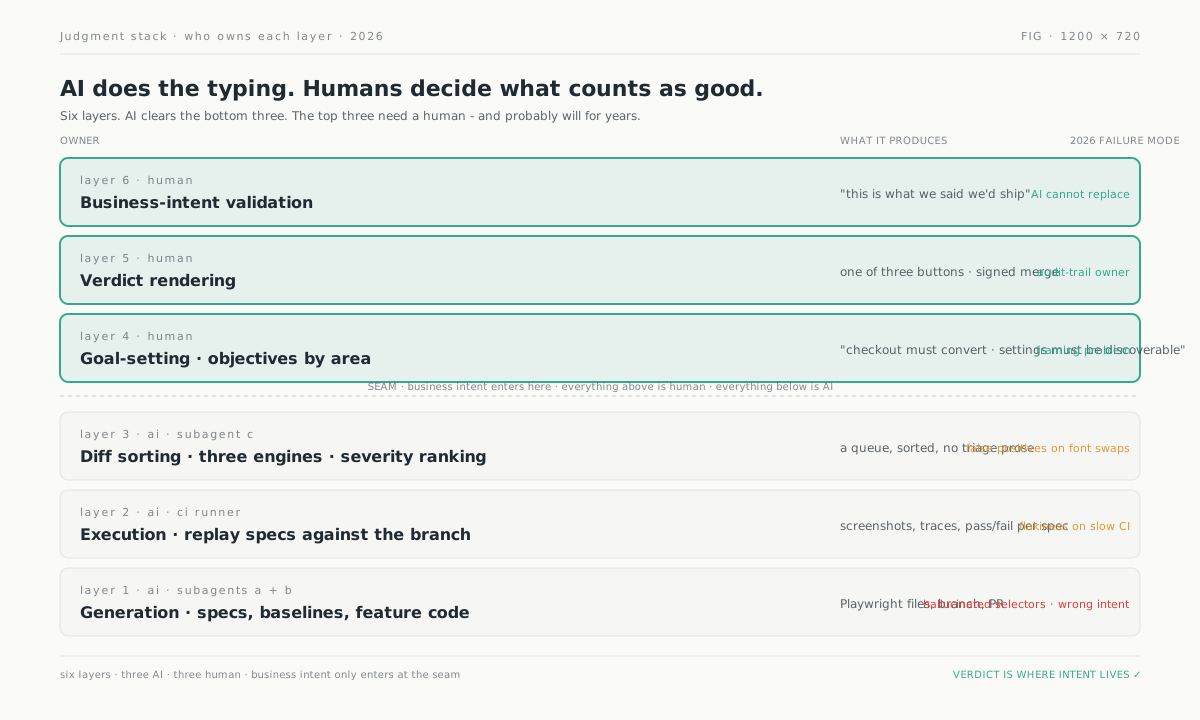
AI will get better. But “good enough to remove the human verdict” is not on a one-year horizon for tests that validate real business goals, and pretending otherwise is how teams end up with the silent regressions we covered in AI Test Generation: Hype vs Reality. The role is changing. It is not disappearing.
How to make the transition
Stop writing assertion code, owning timing logic, and hand-triaging CI failures one at a time. If you are still paying the 40% test-maintenance tax fixing selectors by hand, you have not transitioned - you have hired AI to copy your work faster.
Start defining areas. Pick five surfaces that matter (cart, checkout, auth, settings, your highest-traffic landing page). Write the objective in English and hand it to the test-author subagent.
Pick a diff tool with a clean verdict UI: baseline, current, and intent on one screen with three buttons. If the tool needs you to read code before voting, the verdict is thirty minutes, not three, and the loop collapses.
Structure the day around verdict bursts, not review meetings. Two queue reads per day, two to four minutes per iteration.
The career upside
One orchestrator now covers what four testers used to cover, with fewer escaped defects and a signed audit trail on every merge. The role moves out of the QA silo and into the product pod, earning velocity credit instead of bug credit. QA stops being a cost center and becomes the gatekeeper of how fast the team ships.
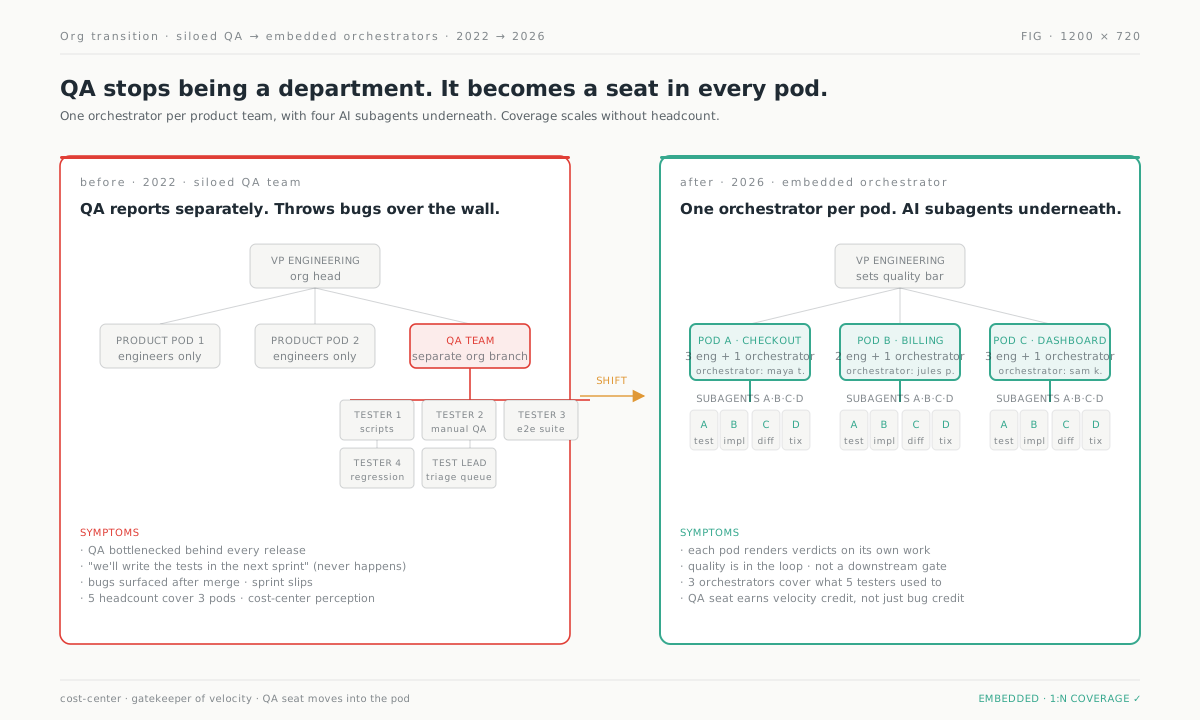
Postings no longer ask for framework checklists. They ask for taste - can you tell when a build is off-spec, in three minutes per look. That was always the senior QA skill. It is now the entire job.
The seat is waiting
If your team ships AI-generated code and nobody signs the verdict on it, you have a quality problem on the way. The orchestrator is the seat that prevents it.
Lastest is built around that surface - open source, Docker-first, three minutes per hundred specs in CI, with the diff queue and the three-button verdict out of the box. Self-host it tonight. The role is changing this year either way; the question is whether your team has the seat wired when it arrives.
More for builders like you
- Visual testing for solo founders
- Visual testing for SaaS MVPs
- Visual testing for devs doing QA