Roughly nine in ten organisations are running some flavour of GenAI inside their quality function in 2026. About one in seven have it operationalised - running in production CI, owned by a team, surviving its own outputs. That gap is the defining QA story of the year. Pilots succeed everywhere. Rollouts stall almost everywhere. This post is about the difference.

The teams that scaled did not find a smarter model. They accepted a constraint everyone else is still trying to engineer around, and then built the orchestration layer that makes that constraint cheap.
What pilot success looks like (and why it doesn’t generalise)
A typical GenAI-in-QA pilot has a shape that practically guarantees a green demo. One champion volunteers a pet area - cart, onboarding, the marketing landing page - hand-picks five flows, hand-curates the specs, reviews the output personally, and ships a tidy dashboard for sprint review.
It works. Of course it works. The surface is small enough that one human can hold all of it in their head. The reviewer pushed the tool internally and has a strong prior the diffs are fine. The AI looks magical because nothing about the conditions stresses it.
The numbers from AI Test Generation: Hype vs Reality describe the dynamic: 84% of devs use AI tools, only 33% trust the output; 72.8% of QA professionals call AI testing their top priority, adoption barely moves. The pilot does not falsify any of that. It just runs at a scale where trust never has to be load-bearing.
Why pilots stall on the way to rollout
The wheels come off the moment the surface grows past what the champion can hold in working memory. Five areas becomes fifty. Thirty specs becomes six hundred. The daily diff count jumps from three to forty-seven. Same tool, same model, same prompts - suddenly producing output nobody has the time or context to triage.
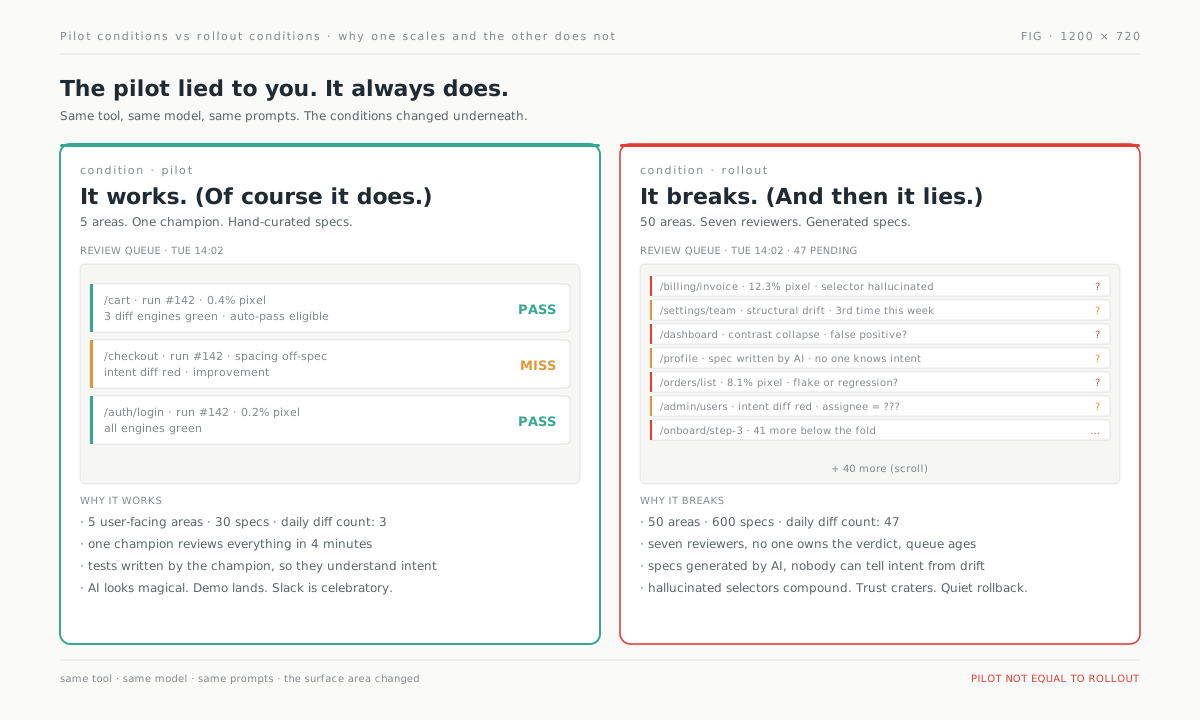
Three things stack at rollout. Hallucinations compound - a selector fabricated once in fifty looks fine in pilot and disastrous at thousands of specs a day. The champion can’t review everything any more, so the review baton lands with people who did not write the specs and cannot tell intent drift from regression. Trust erodes the moment a few false positives slip through, and once reviewers stop opening the queue, the suite is technically running but functionally dead. Badges stay green. The team quietly reverts to manual testing for anything they care about. Nobody writes a postmortem. The AI testing layer just becomes a thing people pretend is on.
What the 14% did differently
The teams that crossed the gap share an architectural pattern, not a vendor. They built an orchestration layer with exactly one human seam.
The pattern: tickets in → orchestrator routes the work → specialised subagents fan out (test author, implementer, validator, ticket scribe) → sorted diff queue → a human picks one of three verdicts → the scribe writes a templated ticket back into the queue. No subagent decides whether its own work is good. The human’s only job is to pick a lane.
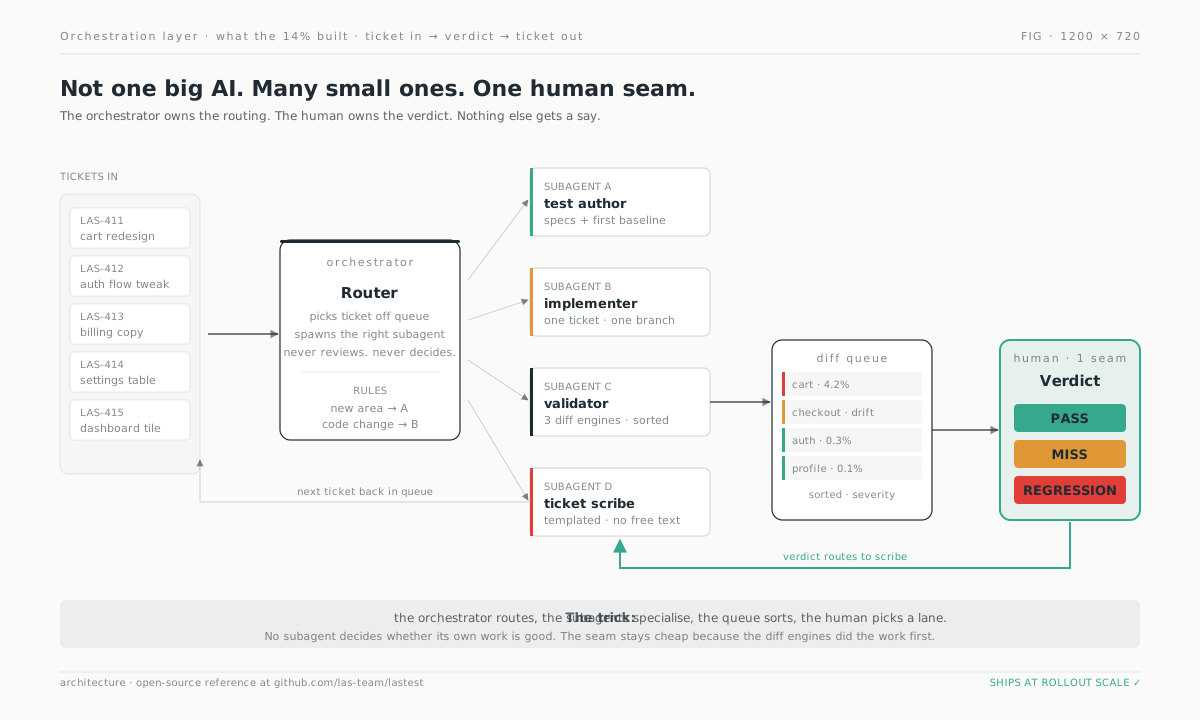
We documented this loop in Human-in-the-Loop: The Verification Seam. The point here is what it lets you stop doing: stop hiring reviewers as the surface grows, stop writing free-text triage tickets, stop treating AI as an end-to-end product. Diff engines sort by severity, the human renders a verdict in three minutes, failures route to a deterministic ticket template instead of a Slack thread.
The math works because the seam stays cheap regardless of surface size. Five areas, three minutes a day. Twenty-five areas, fifteen minutes a day. Sub-linear scaling is the entire trick.
The transparent thing nobody says
AI cannot yet write tests that genuinely validate business intent. Not in 2026. The model does not know what your conversion funnel is supposed to do, which page is your highest-revenue surface, or that the empty-cart state is intentionally cheerful because your brand is cheerful, not broken. It copies patterns. It cannot judge whether the pattern is right for your product.
The teams that scaled accepted this. They put AI where AI is cheap (generation, replay, classification, ticket scribing) and put the human where the human is cheap (one verdict, three buttons). The teams stuck in pilot purgatory are still trying to engineer the human out entirely - stacking LLM-as-judge on top of LLM-as-judge - and they run directly into the trust wall the 33% number describes.
You cannot LLM your way out of the validation problem. You can make the validation step cheap enough that it stops being a bottleneck. Not a smarter agent. A cheaper human.
How to move from pilot to rollout this quarter
The work fits in a single quarter if you do not skip phases. The trick is closing the loop once at small scale before you scale the area count.
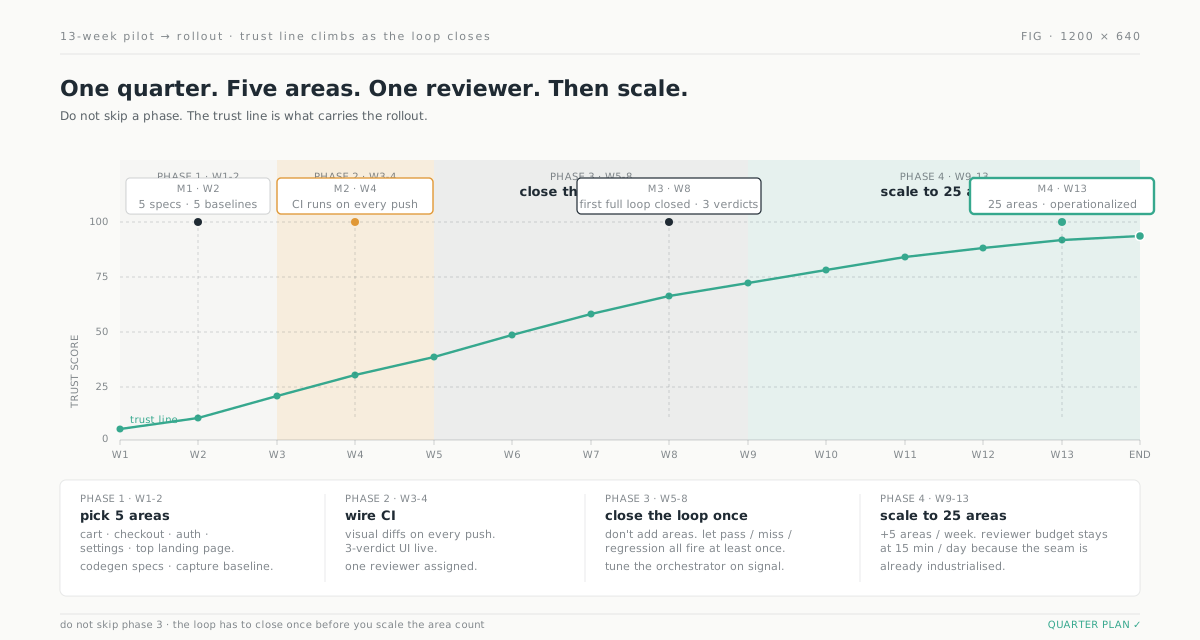
Weeks 1-2 - pick five areas, not fifty. Cart, checkout, auth, settings, top landing page. Codegen the Playwright specs, capture the first baseline in Lastest. The major areas are 80% of the regression-catch value and fit one reviewer’s head.
Weeks 3-4 - wire visual diffs into CI on every push. Three-verdict UI live. One reviewer assigned. The job is only to pick the lane - no free-text triage.
Weeks 5-8 - close the loop once. Do not add areas. Let pass, miss, and regression each fire at least once. Watch what the templated tickets do when they land back in the queue. This is the phase the 14% nail and the 86% skip; the loop has to close on itself before it can carry weight.
Weeks 9-13 - scale from five areas to twenty-five. Roughly +5 per week. The reviewer budget should stay flat at fifteen minutes a day. If it doesn’t, stop adding areas and tune the queue sort. Sub-linear scaling is the whole point.
The scale gap is not a model problem. It is an architecture problem dressed up as a model problem so that someone can sell you a model. If you are in the 90% experimenting and not yet in the 14% operationalised, the move this quarter is a smaller pilot, closed end-to-end, with the orchestrator on a cron job and one reviewer on the hook for the verdict. Lastest is the surface where the seam happens - open source on GitHub, runs in CI in three minutes per hundred specs. Five areas. One reviewer. One quarter. The 14% started exactly there.