
Lost Pixel and Lastest are both free, open-source visual regression testing tools with very different approaches.
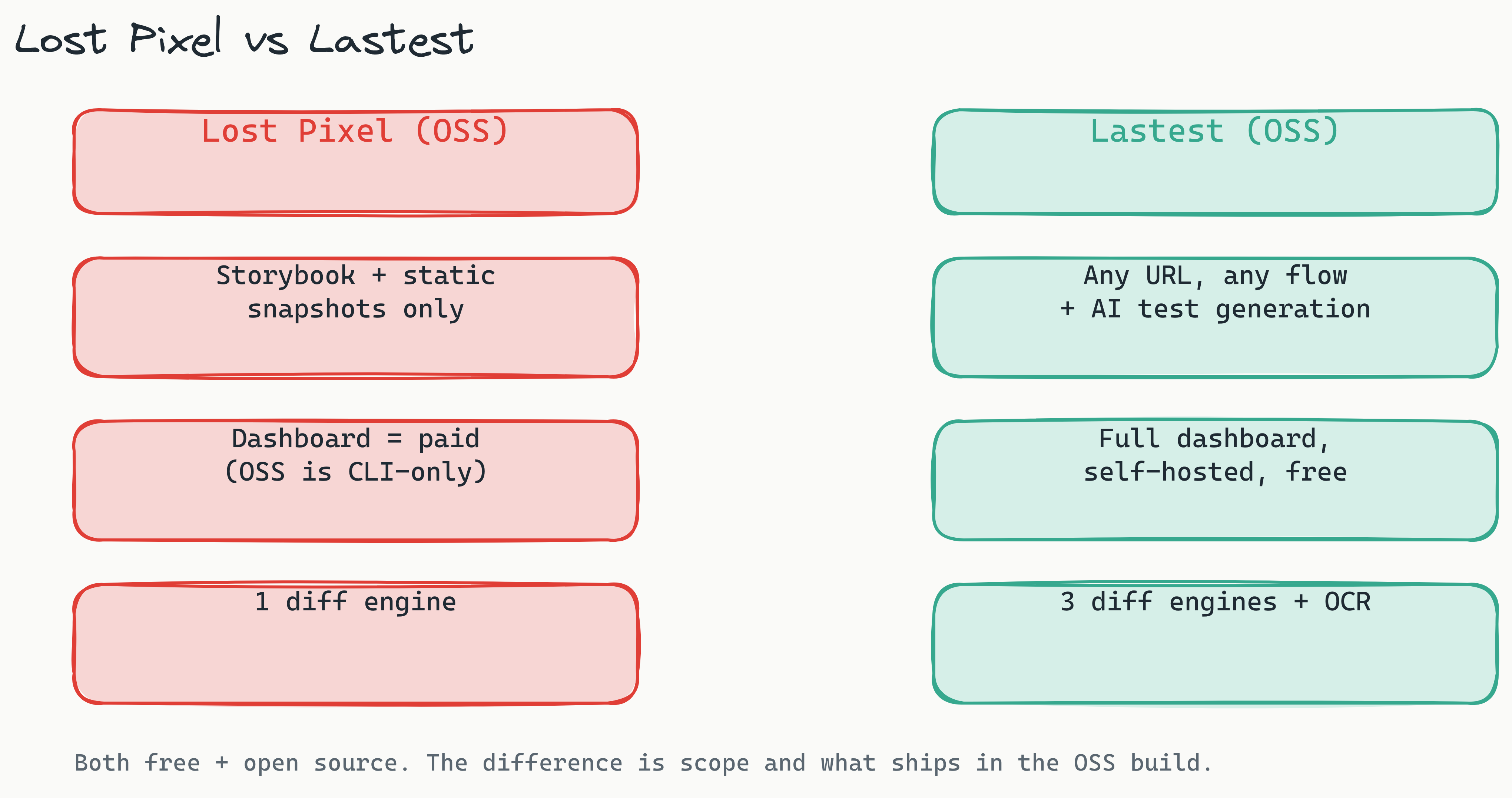
Lost Pixel focuses on Storybook and static pages. Lastest focuses on full application testing with AI generation and a complete review dashboard.
Scope
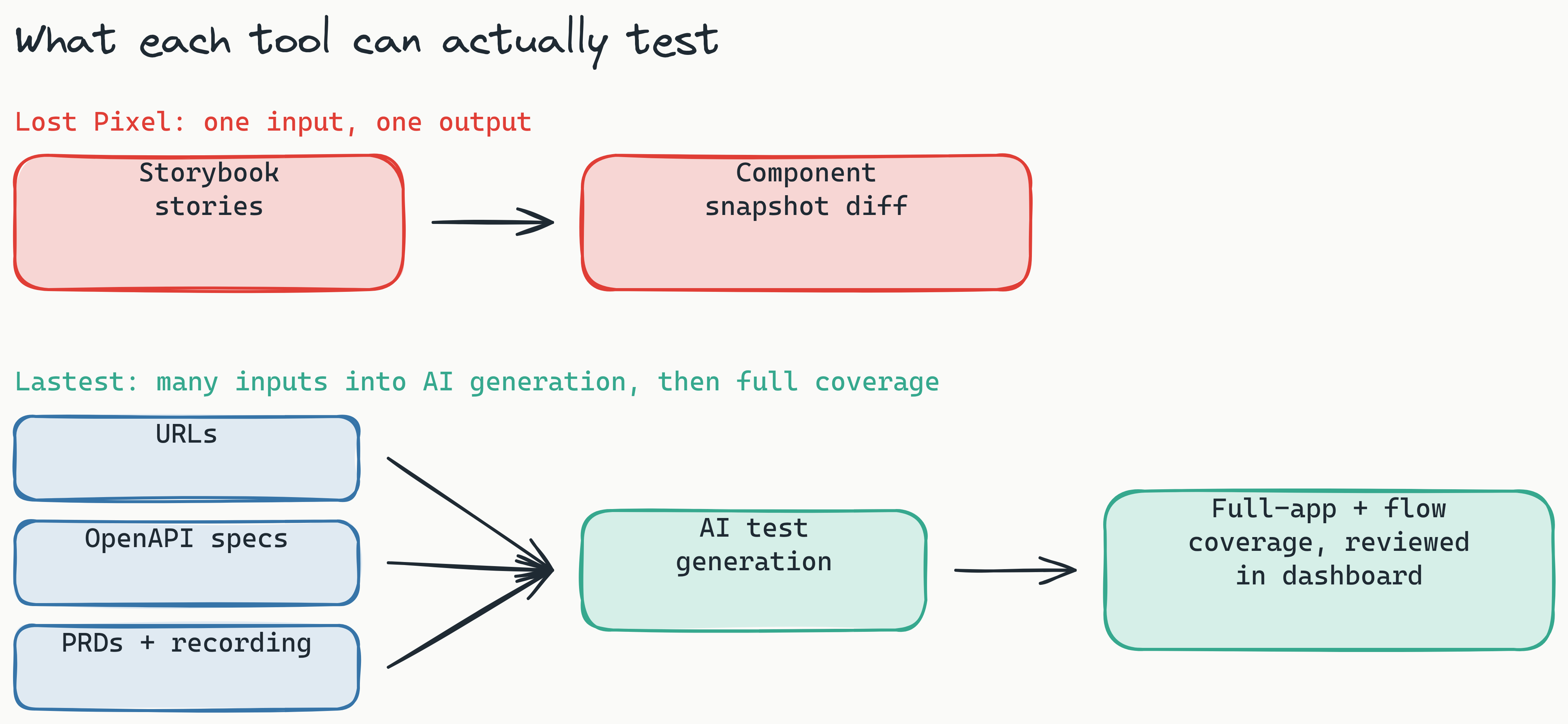
Lost Pixel: Storybook stories and static page snapshots. No user flow testing, no interactions.
Lastest: Full application testing - any URL, any flow. AI-generated tests, no-code recording, spec-driven generation.
Dashboard
Lost Pixel: OSS is CLI-only. Dashboard requires paid Lost Pixel Platform.
Lastest: Full web dashboard (self-hosted, free) with team management, AI analysis, approval workflows, accessibility auditing.

When Lost Pixel Might Be Better
- Minimal setup, near-zero infrastructure
- Storybook stories only
- Baselines in git (reviewable in PRs)
When Lastest Is Better
- Full-page and user flow testing
- AI test generation
- Dashboard with team collaboration
- Three diff engines with OCR handling
- Testing templates for different app types